7 tips for more successful in-person sales (IPS) sessions
In-person sales (IPS) has been a cornerstone of successful photography businesses for decades. While online galleries are convenient, nothing compares to sitting alongside your clients, helping them choose images they’ll treasure, and guiding them towards artwork they’ll enjoy every day.
We recently launched our new ProSelect integration, making it easier to move from managing your business in Light Blue to running polished IPS sessions in ProSelect. That felt like the perfect opportunity to sit down with Ron Nichols, CEO of Pro Studio Software and one of the photography industry’s most experienced voices on in-person sales, to ask what separates a good IPS session from a great one. We’ll finish by looking at how you can use Light Blue to lay the groundwork for successful IPS sessions long before your client sits down to view their images.
 “The biggest failure photographers make is they don’t give customers the opportunity to buy.”
One theme came up again and again throughout our conversation: your clients aren’t looking for someone to simply deliver photos. They’re looking for an expert to help them make the right decisions.
Here are some of Ron’s best tips for creating IPS sessions that feel valuable for your clients, and more profitable for your business.
1. Think like a consultant, not a salesperson
Many photographers worry that IPS feels “salesy”.
Ron doesn’t see IPS as a sales technique. He sees it as professional guidance.
Before reviewing images with clients, he’d always ask one simple question:
“I ask ‘Is it okay if I give you my opinion as we’re going through these?’… The customers have never said no.”Clients hire you because you’re the expert. They want your advice, not just access to an online gallery. They don’t know which expressions work best together, what size artwork will suit their home, or which images will create the strongest album. You do.
An IPS session isn’t about persuading someone to spend more money. It’s about helping them make confident decisions they’ll be happy with for years.
That shift in mindset changes everything.
2. Guide the selection process
Rather than dropping hundreds of images into an online gallery and hoping clients work through them, Ron recommends leading them through a structured process.
His approach is surprisingly simple:
- Start with a slideshow so clients can simply enjoy their photographs.
- Then review each image individually.
- Ask for a simple “Yes”, “Maybe”, or “No”.
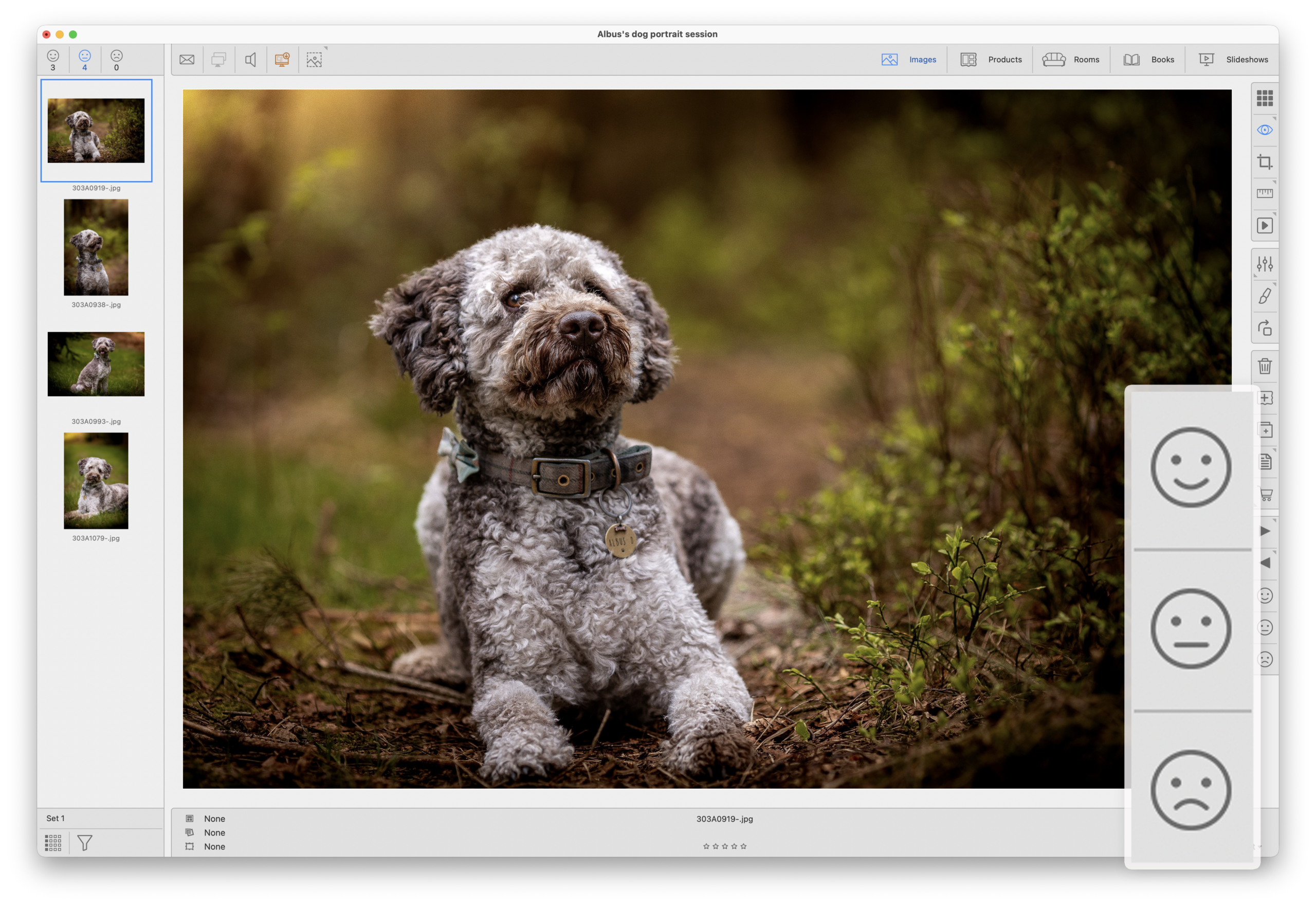 “We’re not going to worry about comparing anything.”
By removing comparisons early on, clients make decisions based on whether they genuinely love an image, rather than which one is slightly better than another.
This avoids overwhelming clients and keeps the focus on selecting images they genuinely love.
Ron only compares images that are genuinely similar once they’ve already been moved into the Yes tab:
“I only want to compare like images, and I’m going to do that in a very, very limited fashion.”It also allows you to offer your professional opinion throughout the process.
3. Help clients visualise the finished product
One of the biggest challenges for clients is imagining how photographs will look once they’re printed. As Ron explains:
“Photographers are pretty good at visualising things… but customers have a real problem with that.”That’s exactly why showing artwork at the correct size, on their own wall, is so powerful. A beautiful portrait on a laptop screen is very different from seeing it as a 40-inch framed print above a sofa.
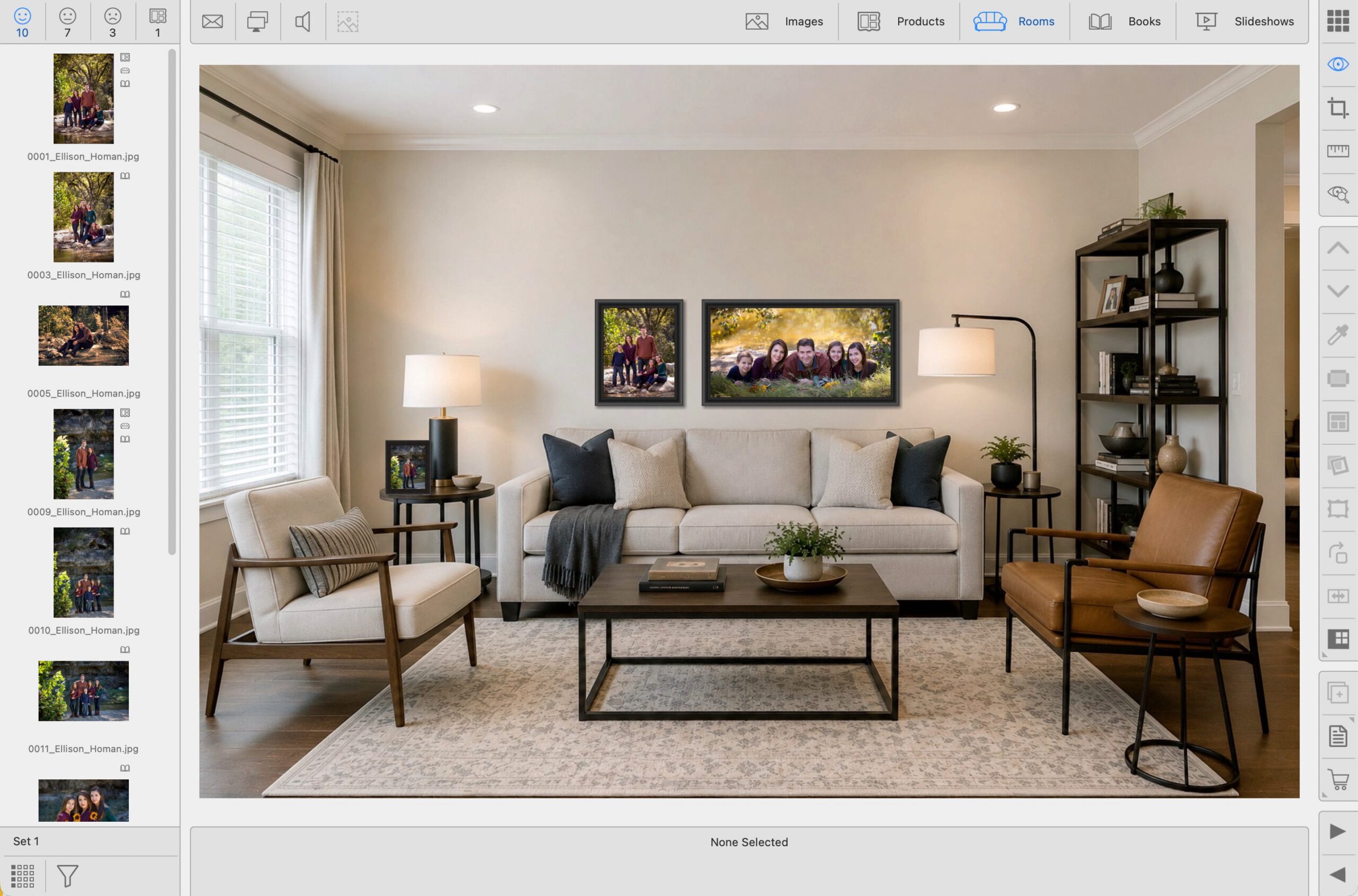
This is where visualisation software like ProSelect really shines. Showing artwork at the correct size, on a photograph of the client’s own wall, removes uncertainty and helps clients picture the finished result.
Instead of asking them to imagine, you’re letting them see it.
4. Don’t be afraid to be the expert
One of our favourite moments from the interview came when Ron said something many photographers need to hear:
“You have to position yourself as the expert.”Clients almost always welcome guidance.
If someone is hesitating between two images, you can explain which expression feels stronger.
If two photographs work beautifully together as a wall collection, tell them.
If an image isn’t quite as strong as the others, be honest.
Ironically, recommending against a purchase when appropriate often builds more trust than trying to sell every photograph.
5. Create an experience, not just a viewing
IPS should feel different from scrolling through an online gallery.
Ron recommends creating an environment that reflects the quality of your work.
That doesn’t necessarily mean a huge dedicated studio. It means creating a calm, welcoming space where clients can focus on their photographs without distractions. Ron believes your viewing room should reflect the value of what you’re selling.
As he says:
“You want it to look like money.”Whether that’s a dedicated presentation room or simply a carefully prepared meeting space, the environment helps reinforce that clients are making an investment in artwork, not just buying files.
If possible, let clients handle your products too.
Feeling the texture of a fine art print, the finish of a canvas, or the weight of a framed piece helps them appreciate the value of what they’re buying in a way that a digital catalogue never can.
6. Set expectations before the session
One of the biggest causes of awkward sales appointments is mismatched expectations.
If clients have no idea what your artwork costs until they’re sitting in front of you, the conversation immediately becomes more difficult.
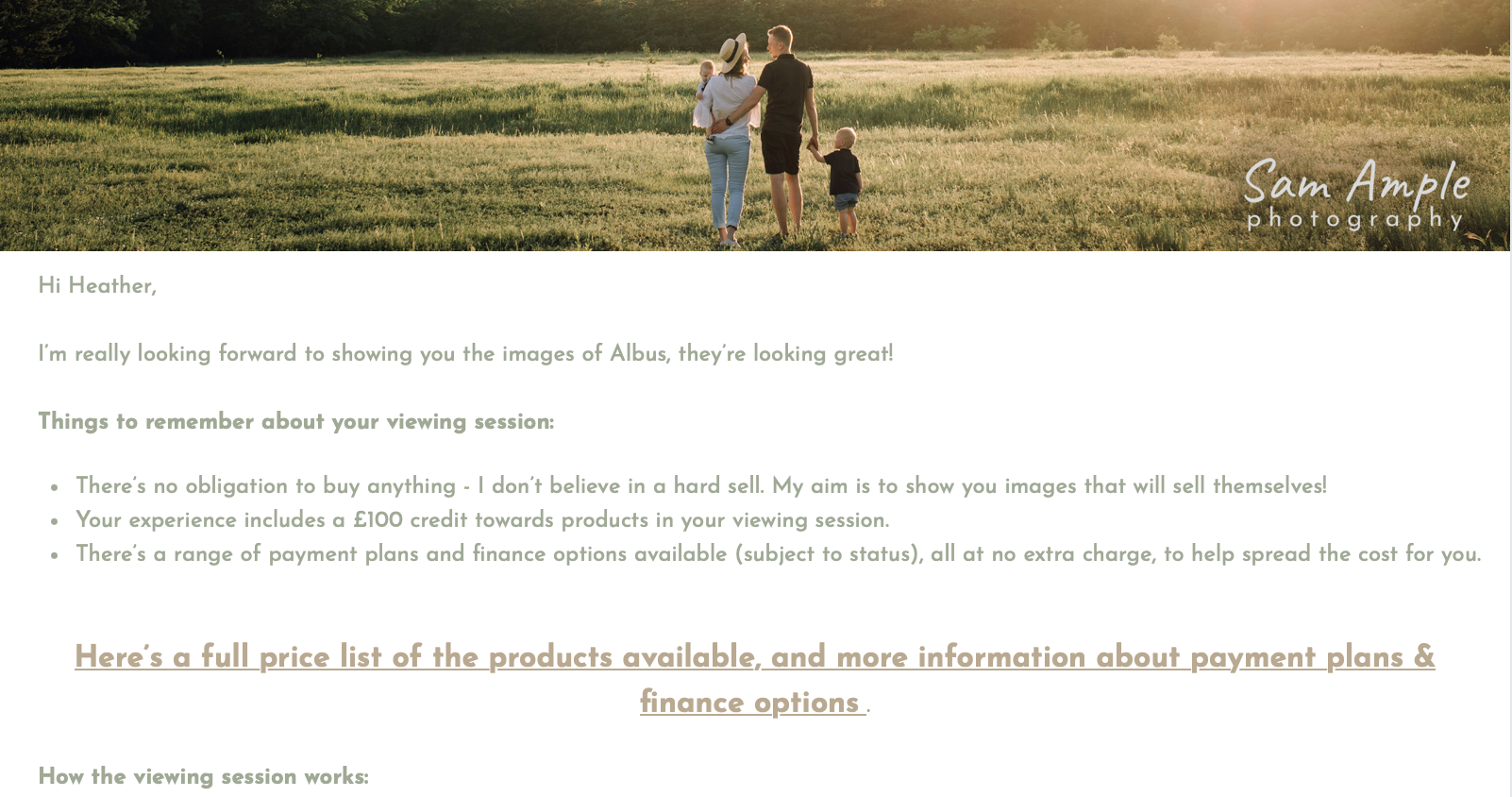
Ron always discussed pricing before the IPS appointment because:
“I don’t think you should ever walk into a viewing session without the client having some expectation of what they’re going to spend.”That doesn’t mean hard selling.
It simply means helping clients understand what’s available, typical investment levels, and what most people purchase.
When clients arrive already knowing what to expect, they can focus on choosing the images they love rather than worrying about unexpected costs.
7. Build systems that create consistency
Successful IPS isn’t just about what happens during the appointment.
It’s about having a repeatable process that delivers a consistently great experience for every client.
“So much of it is building customer relationships… taking care of the customer and doing a good job.”That’s one of the reasons the ProStudio software team developed ProSelect, to provide photographers with a structured workflow that takes clients from viewing, to selecting images, to designing products, and finally into production.
The same principle applies across your entire business.
When your enquiries, bookings, contracts, invoices, questionnaires, communications and finances all follow consistent processes, you spend less time on admin and more time creating a great client experience.
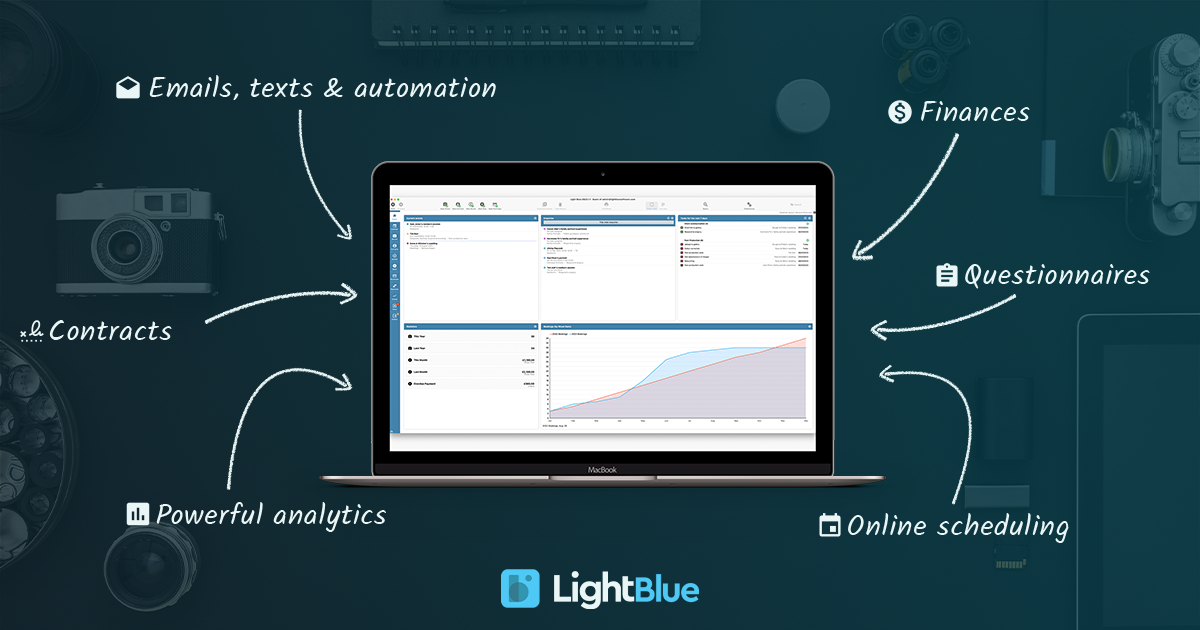
That’s exactly where Light Blue fits in.
Light Blue helps you manage everything leading up to your IPS session, and everything that happens afterwards. From enquiry to booking, contracts, invoicing, scheduling and production, it keeps your business organised so you can focus on your clients.
And with our new ProSelect integration, it’s now even easier to move seamlessly from managing your photography business in Light Blue to running polished, professional IPS sessions in ProSelect.
If IPS is already part of your workflow, or you’re thinking about introducing it, the integration helps connect two powerful parts of your business together.
Related
- A better way to manage enquiries in Light Blue
- How Corporate Photographers Can Win More Annual Repeat Work with One Simple Workflow
- How to nurture enquiries on autopilot with Light Blue
- Mileage Allowance Rates Have Increased: How to Update Your Settings in Light Blue
- How to Build Long-Term Relationships With Your Portrait Clients
- Which of your shoot locations brings in the most revenue? Here’s how to find out with Light Blue.
- How to Manage Photography Client Expectations
- A Smart Way to Compare This Year’s Sales with Last Year’s (Up to This Point)
- Print a Handy Summary of Your Shoot Record with Just One Click
- Present Contracts In-Person with Your iPad or Tablet